WUBER
WUBER's e-commerce transformation is an example of a shift from a marketplace-first model to a scalable D2C channel, which gives the brand greater control over sales, margins, product offering, and the relationship with the end customer.

WUBER Migration to Shopify Plus and Development of a Scalable D2C Channel for a Tool Brand

Tools
D2C
About
WUBER

WUBER is a strong Polish brand operating in the workshop tools and accessories segment. It develops direct sales through its own e-commerce and marketplace channels, targeting individual customers and semi-professional users – DIY enthusiasts, renovation teams, and people undertaking DIY projects.

The brand builds its position through a combination of wide product availability, an attractive quality-to-price ratio, and a strong presence in digital channels. Unlike many traditional premium tool manufacturers, WUBER doesn't compete solely on technology or a long history, but primarily on availability, adaptation to users' real needs, and a rapid time-to-market for new products.

Visit the store
Challenges

WUBER employs a sales model characterized by high operational intensity. The brand offers a wide product catalog, a dynamic pricing policy, a strong reliance on performance marketing, and a significant presence on marketplaces, including Allegro.

The existing store, built on AtomStore, no longer met the company's business needs. The platform limited the pace of development, made implementing changes difficult, and did not provide sufficient flexibility for further scaling D2C sales.

WUBER needed a new technological foundation: scalable, efficient, and ready for further development, both in Poland and in other markets. Given the brand's recognition, sales volume, and reliance on digital channels, a smooth implementation and launch of the new store was crucial.

The AtomStore-based shop was difficult to develop and limited the speed of implementing new sales initiatives. In practice, this hindered further scaling of its own channel and kept the company dependent on external platforms. WUBER had a strong sales position on marketplaces, but this model limited control over margins, customer relationships, and the shopping experience. The proprietary store was meant to become the central D2C channel, not just an additional sales point.

WUBER manages an extensive portfolio of tools, accessories, product variants, and kits. The store needed to support a clear product offering structure, efficient catalog management, and convenient execution of sales and promotional activities.

One of the business goals was to create an online store that would not only process sales but actively drive their growth. Crucial to this were mechanisms designed to increase average order value, such as product bundles, cross-selling, and enhanced product presentation.

Given the large sales volume, the store needed to be well integrated with operational systems. A key element of the project was integration with Sellasist, as well as technical preparation for further automations, increased traffic, and sales growth across multiple channels, such as B2B.

Solution

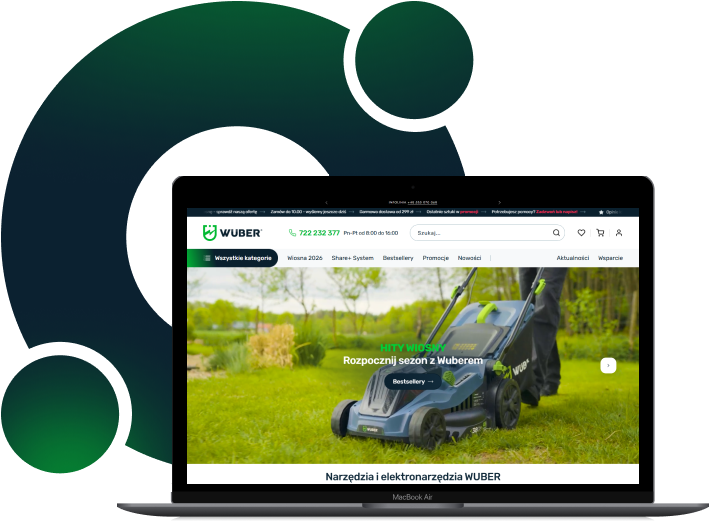
Attomy supported WUBER in migrating to Shopify Plus and building a new custom-designed store, which was preceded by in-depth UX workshops and user analysis. The project's goal was not merely a redesign, but to create a new technological foundation for further D2C sales growth.

The scope of work included Shopify Plus implementation, configuring sales features, integration with Sellasist, and technical support during the store launch. This allowed WUBER to transition to the new environment with controlled risk and maintained sales continuity. The project was conducted in close collaboration with the client's team, with direct operational communication and quick access to decision-makers.

Shopify Plus Implementation

We launched the WUBER store on Shopify Plus, providing the brand with a stable, scalable platform for continued D2C sales growth. The new environment was designed to handle increased traffic, facilitate faster implementation of changes, and support further expansion of its direct-to-consumer channel.

Custom design tailored for tool sales

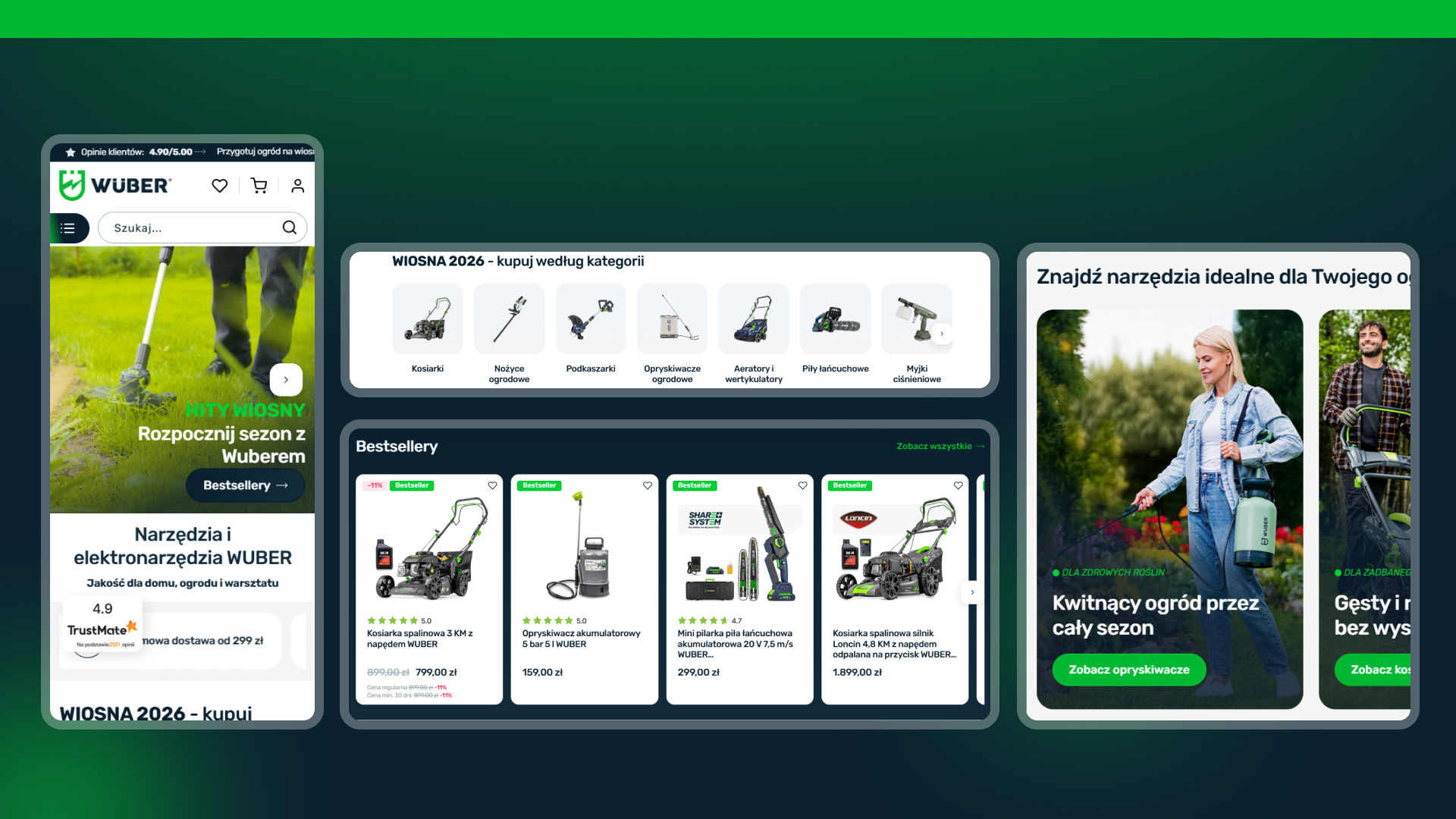
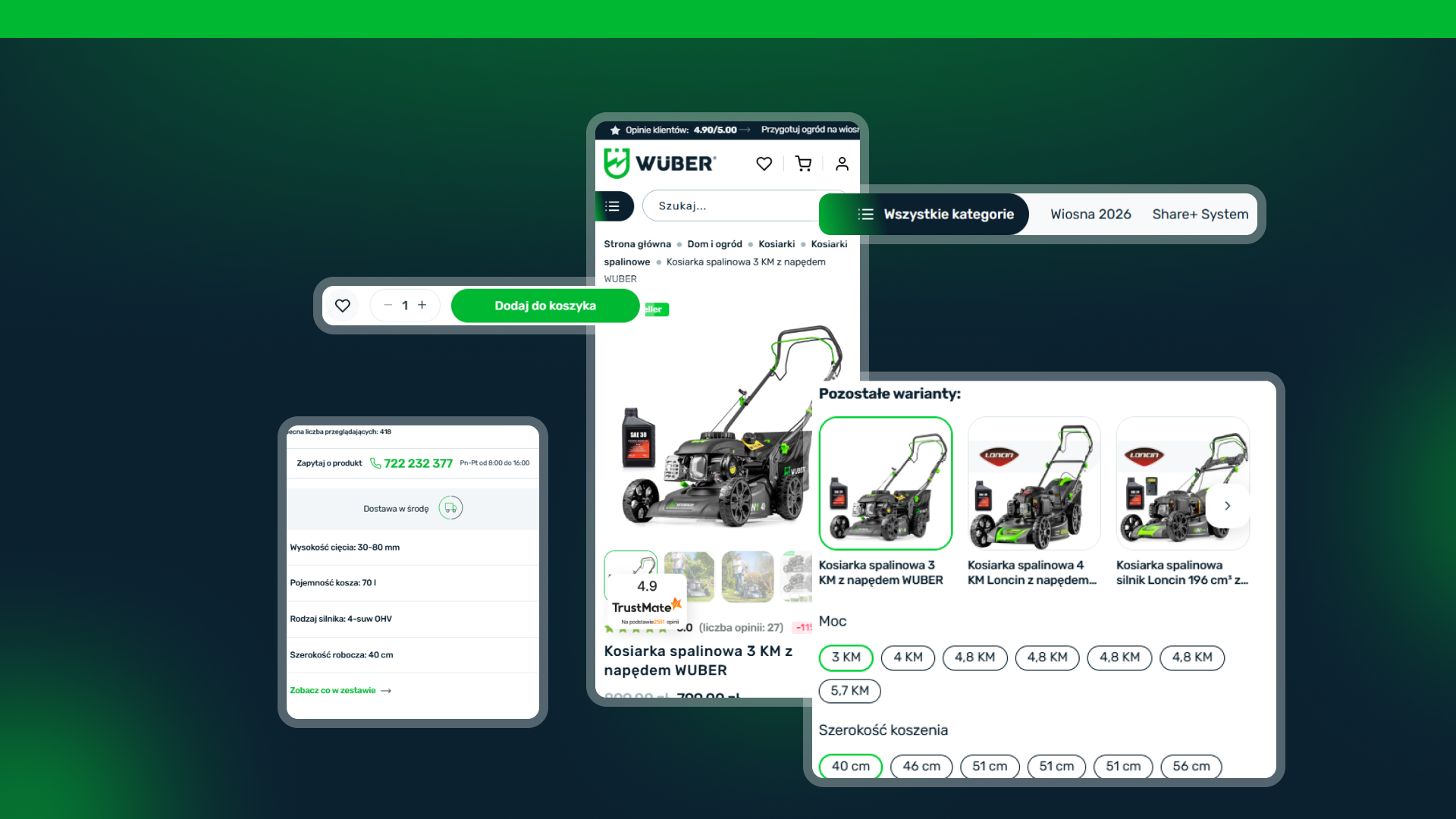
The e-commerce store was developed based on a custom design, tailored to the needs of customers purchasing tools and workshop accessories. The design process incorporated UX design, workshops, and an in-depth analysis of users and their behavior. The key was combining clear product presentation, a simple purchasing process, and features that support quick purchasing decisions.

Streamlining the store structure and purchase funnel

We designed the store's structure to support WUBER's extensive product range and make it easier for customers to find the right products. Our work involved streamlining the customer journey, categories, product presentation, and elements impacting conversion.

Sales Functionality Configuration

The online store was configured to support sales strategies vital for the WUBER model, including the development of product kits, bundling, and mechanisms designed to increase average order value. This enables the new D2C channel to better leverage the potential of its extensive product portfolio.

Sellasist Integration

We integrated sales with Sellasist, enabling operational support for eCommerce and marketplaces. The integration was a key component in establishing a consistent sales ecosystem, allowing Shopify to function as the central D2C channel while seamlessly integrating with the company's existing processes.

Resultaten

Seamless implementation of the WUBER store on Shopify Plus

  • The brand gained a new, scalable eCommerce platform ready for further D2C, B2B, and international sales growth. 
  • Technical support during launch helped mitigate risks associated with migration and platform change.

Greater control over your own channel

  • The new store reduces reliance on marketplaces and supports building a direct relationship with the end customer.
  • WUBER gained greater control over communication, offerings, the shopping experience, and margins.

Organized store structure and purchase funnel

  • The new store architecture makes it easier for customers to navigate through an extensive product catalog.
  • The improved product offering structure boosts conversion and enables more effective presentation of bundles and complementary products.

Technical preparation for further scaling

  • Shopify Plus laid the foundation for increased traffic, further integrations, UX development, and expansion into new markets.
  • The new environment provides the opportunity to launch sales in additional EU markets.
  • Integration with Sellasist supports operational sales management across multiple channels.

“WUBER is an example of a brand for which eCommerce serves as a genuine sales tool, not merely a branding channel. With such a dynamic product offering, a strong presence on marketplaces, and the increasing significance of the D2C channel, it was crucial to build a platform that wouldn't impede future growth.

The migration to Shopify Plus allowed us to streamline the technological foundation, enhance the flexibility of sales activities, and prepare the store for subsequent development phases: integrations, international expansion, B2B, marketing automation, and further conversion optimization. This project clearly illustrates how technology, marketing, and operations must collaborate for eCommerce to successfully scale a business.”

Artur Rak
Delivery Manager & Shopify Lead, attomy

Let's talk about migrating to Shopify Plus and building a scalable D2C channel for your brand

Porozmawiajmy o wsparciu biznesowym dla Twojej firmy

What's next?
The expert will contact you after analyzing your requirements.
If necessary, we sign NDAs to ensure the highest level of confidentiality.
You will receive from us a comprehensive proposal for action with an estimate and a schedule.
* Mandatory fields
Thank you for contacting us!
Oops! Qualcosa ha insegnato il modulo.